






I'm an AI engineer and co-founder at SECA, an AI startup spun out of LG Electronics, based in Seoul.
I design end-to-end AI pipelines and turn them into products people can use: data processing, models, tools and evaluation, connected into one system. I use AI throughout development to build, test and refine that work. At SECA, I apply this approach to complex hardware data.
Before SECA I worked at LG Electronics AI LAB and NAVER, and did research at Seoul National University.


Navigate Claude Code and Codex sessions as numbered trees, and pick up from any point.
A long agent session is hard to look back on. agent-tree reads the session logs that Claude Code and Codex CLI already keep and turns each one into a numbered outline: every prompt you typed, with the reads, edits and commands it triggered nested underneath. Pick any step and you get a ready-to-paste prompt that continues from there in a fresh session, or forks to try another way.
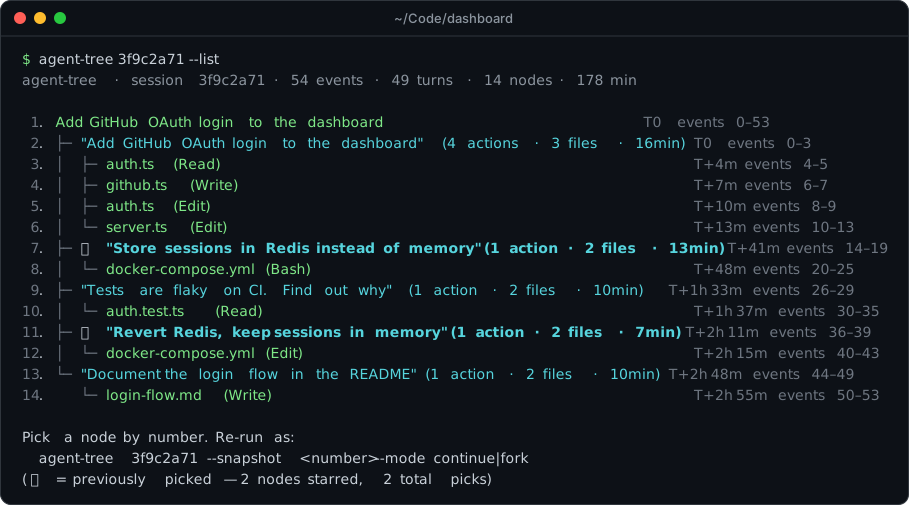
- In the terminal: an interactive tree, plus
--list,--diffand--jsonoutput for scripts. - Inside Claude Code: a plugin with six MCP tools, so Claude can list, browse and resume sessions for you.
- Local and redacted: it reads the logs already on your machine and strips API keys, tokens and card numbers before anything is shown, copied or exported.
npm install -g @seungwoolee/agent-treeRepository · npm package · Latest release
If it saves you a long scroll through a session log, a star on the repo helps other people find it.
- AI product engineering: pipeline design, model integration, evaluation and workflow automation.
- AI for hardware data: applying end-to-end AI pipelines to complex hardware data at SECA.
- Developer tools for AI-assisted work: practical tools, like agent-tree, that make agent sessions easier to review and resume.
- Quantitative research: applying AI to data-driven research and systematic experimentation.
You can reach me on LinkedIn or by email. For agent-tree bugs and ideas, open an issue.