Repository navigation
fix(⚛️): size the canvas context from its layout, and build the ref handle once - #525
YevheniiKotyrlo wants to merge 3 commits into
Conversation


…andle once

getContext() measured the canvas with getBoundingClientRect(), which includes
the transforms of the view and its ancestors, so a context made while the
canvas was drawn under transform: [{ scale: 0.5 }] got half its layout size
for canvas.width/height and clientWidth/clientHeight. measureLayout() relative
to the view itself answers its layout size without transforms, synchronously
on the new architecture. react-native-web's measureLayout() answers from a
timeout, so on the web the polyfill sizes the context from its <canvas>
element's clientWidth/clientHeight, which getNativeSurface() now reports too.

Canvas passed useImperativeHandle no dependency list, so every render built a
new handle and React re-attached the ref. The handle depends only on contextId
and viewRef, fixed for the canvas's lifetime; the Jest mock builds its handle
once as well.
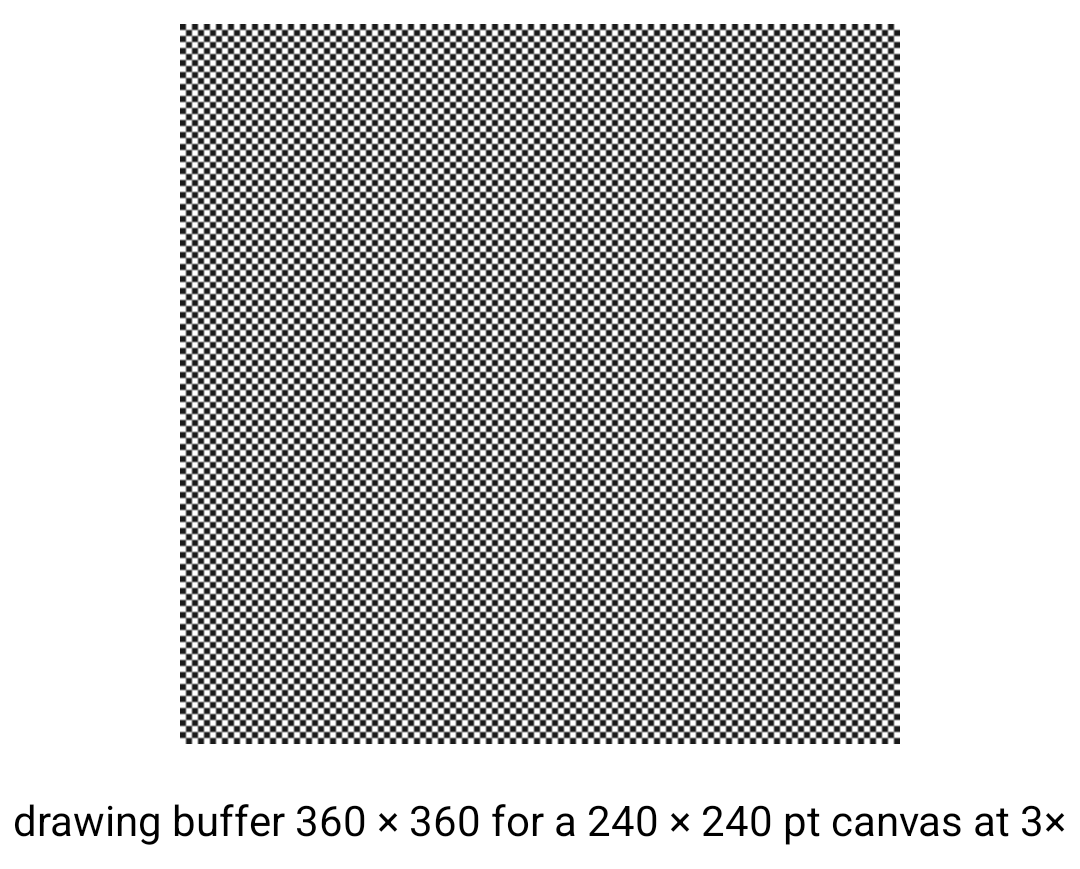
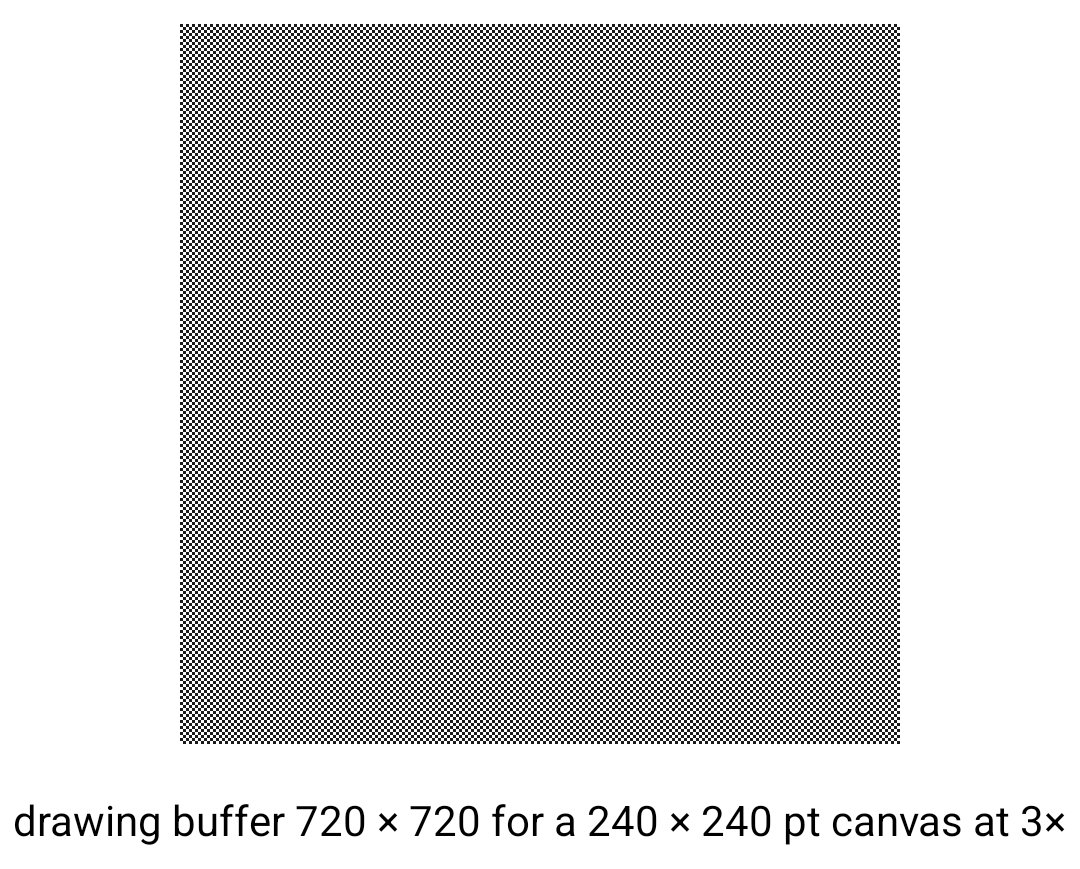
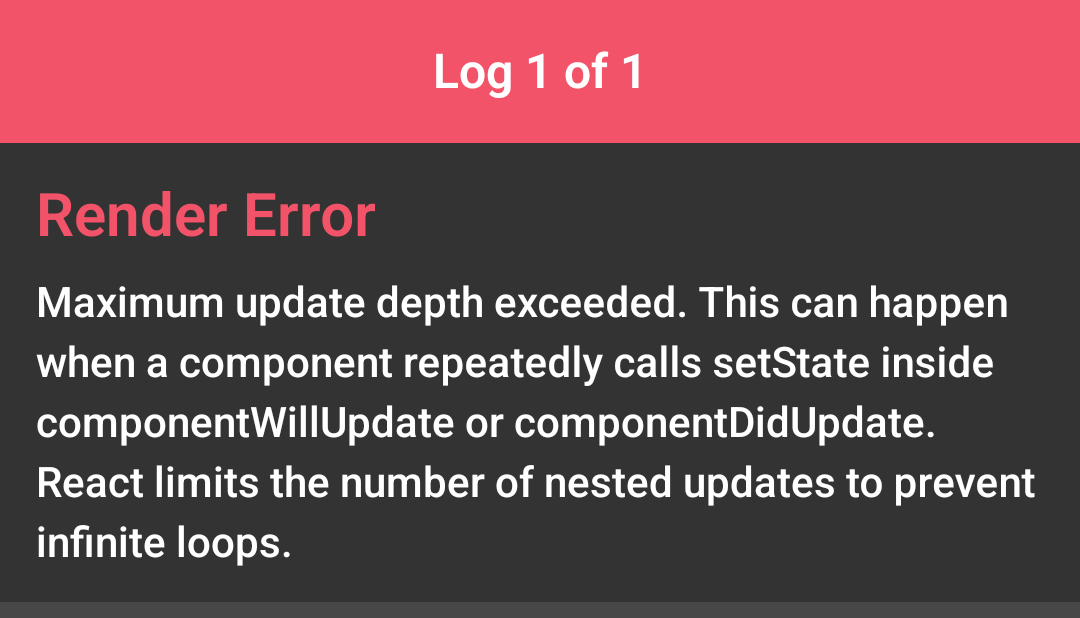
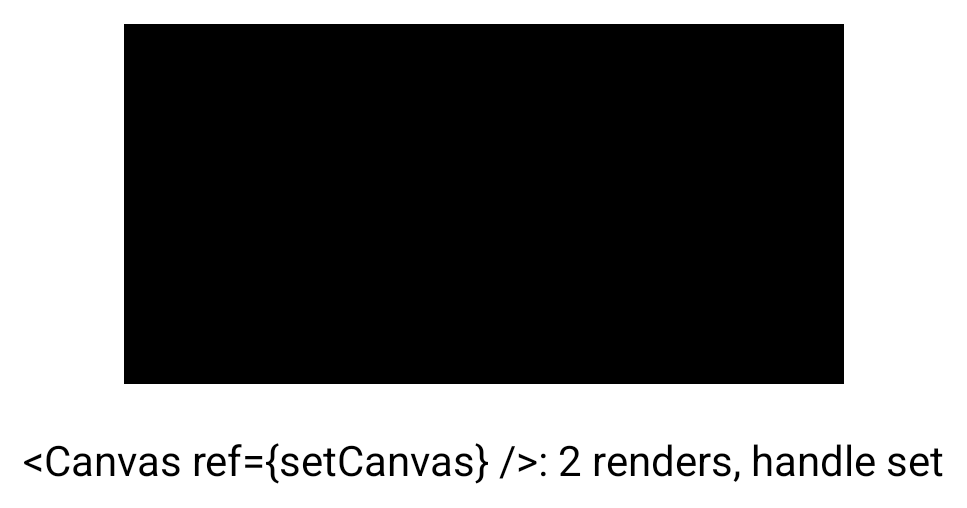
Device evidence — before / afterUNFIXED — on FIXED — with this PR, the drawing buffer is 720 × 720 and the cells are sharp; the state-setter ref renders its owner twice.
Galaxy S23 (Android 14), debug build of the example app. First row: a 240 × 240 pt canvas whose effect runs the docs' setup ( |



…heck

The Tests screen's rerender() kept one pending resolver, so a request made
before the previous one committed left that promise unresolved until the eval
timed out. useRerender() numbers the requests, and the effect after a commit
resolves every request that commit rendered. The Canvas spec requests two
re-renders together and a third after them.

isNativeApp() in setup.ts, total over TestOS, replaces the native-app check
the specs spelled four ways.
…lace each

getNativeSurface() and the context each looked up the canvas element and read
its clientWidth/clientHeight; one helper each now holds that. WebPolyfill.spec
derives its polyfill type from RNWebGPU's and covers the rest of the module:
a second context at an unchanged size writes no attribute, since a write
clears the drawing buffer; getNativeSurface() writes none and binds its DOM
methods to the element; present() is a callable no-op. Canvas drops its
unused state setter binding.
1 participant

Problem
Canvas.getContext()measures the canvas withgetBoundingClientRect(), which includes the transforms of the view and its ancestors, and creates the context at that size:That size seeds
canvas.width/canvas.heightandcanvas.clientWidth/canvas.clientHeight, which the docs describe as the layout size and size the drawing buffer from (canvas.width = canvas.clientWidth * PixelRatio.get()). So a canvas set up while it is drawn undertransform: [{ scale: 0.5 }], as in a zoom-in transition, keeps a drawing buffer of half its layout once it reaches full size: 360 × 360 for a 240 × 240 pt canvas at 3× on a Galaxy S23. On the web the polyfill sizes the<canvas>element from the same box, andgetNativeSurface()reports it.Canvasalso passesuseImperativeHandleno dependency list, so it builds a new handle on every render and React re-attaches the ref each time:<Canvas ref={setCanvas} />renders until React throwsMaximum update depth exceeded, and a stable callback ref is called withnulland a new handle on every render. The Jest mock does the same.Solution
measureLayout()relative to the view itself answers its layout size without transforms, and calls back synchronously on the new architecture. react-native-web'smeasureLayout()answers from a timeout, so on the web the polyfill takes the size from its<canvas>element's ownclientWidth/clientHeightinstead, for the context and forgetNativeSurface().The handle reads only
contextIdandviewRef, which are fixed for the canvas's lifetime, socontextIdis its dependency; the mock's handle depends on nothing.These are wcandillon/react-native-skia#4216 and wcandillon/react-native-skia#4215 for this repo.
Tests
Canvas.spec.ts(e2e), with a canvas on the Tests screen laid out at 64 × 32 and drawn at half that underscale: 0.5: the context's canvas reports 64 × 32 forwidth/heightandclientWidth/clientHeight, and re-renders of the screen keep the same handle. Onmainboth fail: 32 × 16, and a new handle. The screen'srerender()resolves each request once a commit has rendered it, so requests made together all resolve.WebPolyfill.spec.ts: a canvas laid out at 100 × 50 whose bounding box is 50 × 25 gets a 200 × 100 drawing buffer at a device pixel ratio of 2, and a 100 × 50 native surface. Onmain: 100 × 50, and 50 × 25. The spec also holds what the sizing must keep: a secondMakeWebGPUCanvasContext()at an unchanged size writes no attribute, since a write clears the drawing buffer;getNativeSurface()writes none, and binds its DOM methods to the element.isNativeApp()insetup.tsreplaces the native-app check the specs spelled four ways.Verification
yarn lint·yarn tsc·yarn turbo run build --filter='./packages/*'· the Expo template's web build ·yarn test:plugin·yarn check-dawn·yarn build:docs. CI's Android e2e step (debug build, Metro withCI=true) on a Galaxy S23, Android 14: 43 suites and 218 tests passed, wheremainpasses its 42 suites and 211 tests on the same device. The before/after pairs from that device are in this comment. Not run here: the iOS e2e job, which needs a simulator, and the semantic-release dry run, which needs the repository's token. No issue tracks this; I searched the tracker forgetBoundingClientRect,clientWidth,useImperativeHandleandmeasureLayout.